Classic History: A Typeface for Timeless Storytelling
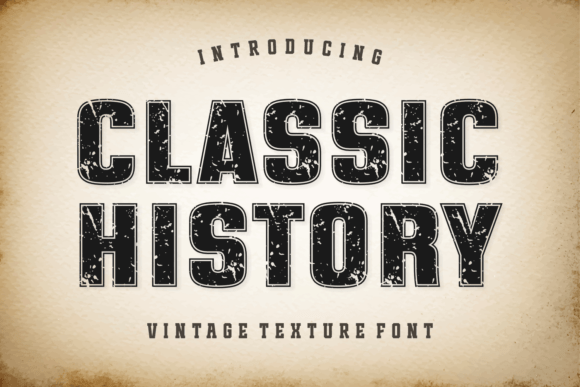
There’s a particular weight to certain designs, a sense of narrative that pulls you in before you’ve read a single word. That’s the feeling Classic History Font is built to evoke. It’s not just a collection of letterforms; it’s a design tool engineered for storytelling. As a premium font in the display font category, its primary job is to make a statement, to set a tone that is immediately recognizable and rich with character. Think of the textured, slightly worn edges of vintage signage or the bold, authoritative headlines on old military posters. Classic History captures that essence—a retro font with a distressed style that feels authentic, not artificially aged.
Visually, it’s a serif font with strong, confident letterforms. The serifs are pronounced, providing a solid foundation, while the subtle texture and imperfections give it a handcrafted, lived-in personality. This isn’t the sterile precision of a modern sans serif; it’s a typeface with history baked into its strokes. Its appeal lies in this duality: it’s bold enough to command attention in a logo design yet nuanced enough to add depth and context to editorial design. For anyone working on a brand identity that needs to convey heritage, authenticity, or a touch of rugged individualism, this font becomes a core design asset.
Where This Creative Font Finds Its Voice
Understanding a font’s strength is about matching its personality to the project’s needs. Classic History excels where a story needs to be told. Its textured, distressed appearance makes it a natural fit for projects that aim for a vintage, artisanal, or institutional feel. It’s a creative font that can transform a simple T-shirt graphic into a piece of wearable art with a narrative, making it invaluable for apparel designers and small clothing lines. The same quality makes it powerful for packaging design, especially for products like craft spirits, heritage foods, or boutique goods where provenance is a key selling point.
In the digital realm, it brings a unique character to web design headers and hero sections, immediately establishing a mood. For social media graphics, especially quotes, announcements, or promotional posters, it cuts through the visual noise with its distinct personality. It’s equally effective in print—think event posters, book covers, or menu designs for a steakhouse or a pub. The key is context. Using it for the body text of a technical manual would be a misstep, but employing it for the chapter titles in a historical fiction novel or the branding for a military surplus store feels instinctively right.
The Practical Side: Using a Display Font Effectively
Choosing a font like Classic History is the first step; using it well is the next. As a display font, its role is typically for headlines, logos, and short, impactful text blocks. Its textured details, while full of charm, can reduce legibility at very small sizes or in long paragraphs. This is where thoughtful font pairing becomes essential. A classic strategy is to pair it with a clean, simple sans serif font or a highly legible serif font for body text. This creates a clear visual hierarchy, allowing Classic History to deliver its powerful first impression while the supporting type ensures readability and flow.
Before committing, test it in context. Place a headline set in Classic History next to your proposed body copy. Does it feel balanced? Does the style support the overall message? Review the included styles—does the commercial font package offer the weight variations you need? For a cohesive brand identity, you’ll need consistency. If you’re using it for a logo, ensure it renders clearly at the smallest size you’ll use, like a favicon. Check the licensing. Most quality fonts are licensed for specific uses (desktop, web, app), so for any commercial project—from a client’s logo design to your own product line—ensure you have the appropriate rights. It’s a flexible tool, but its power is unlocked through deliberate, context-aware application.
Ultimately, Classic History is more than just a retro font. It’s a conduit for atmosphere. It doesn’t just display words; it frames them with a story of craftsmanship, endurance, and style. For the designer, marketer, or entrepreneur, it’s a way to inject that narrative directly into the visual language of a project. Used thoughtfully, it becomes a cornerstone of a memorable design, one that feels both timeless and intentionally crafted for the modern eye.