Evaluating the Cute Bee Font Duo: A Practical Guide for Creative Projects
Understanding the Core Aesthetic: Handwritten Script Meets Calligraphy
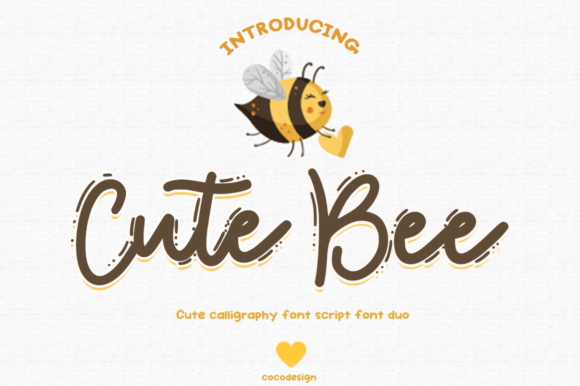
When exploring typography options for projects that demand a personal, artistic touch, the Cute Bee font duo frequently appears as a compelling candidate. At its foundation, this typeface collection combines two distinct styles: a flowing handwritten script and a more formal calligraphy variant. This pairing is designed to offer creators a built-in system for hierarchy and contrast without needing to source and license multiple, potentially clashing, typefaces from different designers. The script component embodies a relaxed, organic flow, ideal for conveying warmth and approachability. The calligraphy style, often used for accents or standalone elements, introduces a layer of elegance and traditional artistry.
What sets Cute Bee apart from many single-style script fonts is this duality. A common challenge in design is finding a complementary typeface that doesn't overwhelm a primary script. The integrated nature of this duo addresses that, providing a harmonious pair that shares underlying design DNA. The inclusion of a Regular variant, distinct from the script, adds further versatility, offering a cleaner option for supporting text or contexts where the full flourish of a script might be impractical.
Key Features and Practical Applications
The charm of a font like Cute Bee lies in its specific feature set and the contexts where those features shine. Its most notable characteristic is the expressive swash—a decorative, flowing extension on certain letters. This element is not merely ornamental; it can be strategically used to guide the viewer's eye, fill negative space, or add a signature flourish to a logo or headline. However, this same feature represents a key tradeoff. While swashes elevate aesthetics, they can reduce legibility at small sizes or in dense text blocks.
Evaluating its best-fit situations reveals a clear pattern. Cute Bee tends to excel in applications where text is used sparingly and impact is paramount:
- Branding and Logos: The duo allows for a main brand name in the expressive script and a tagline in the complementary calligraphy or regular style, creating a cohesive mark.
- Wedding Stationery and Invitations: The calligraphic elements align perfectly with the formal yet personal nature of such events, while the script can handle names and details.
- Product Packaging and Labels: For artisanal goods, cosmetics, or boutique products, the font conveys craftsmanship and attention to detail.
- Headlines, Signage, and Posters: Its high-impact style is designed for short bursts of text meant to attract attention from a distance.
- Quotes and Book Titles: It can imbue literary or inspirational content with a distinct emotional weight and artistic flair.
Conversely, it is generally less suited for long-form body copy, technical documentation, user interfaces, or any context where maximum readability and neutral tone are the primary objectives. The very qualities that make it expressive—its irregular baseline, connected letters, and decorative swashes—can become obstacles in these scenarios.
Comparing Your Options: When to Choose Cute Bee and When to Look Elsewhere
Making an informed decision involves comparing Cute Bee not just to other fonts, but to different categories of typographic solutions. Its core competition comes from two main fronts: other expressive script/calligraphy font families, and alternative approaches like pairing a standalone script with a separate sans-serif or serif font.
Compared to Other Script Duos: The market for script fonts is vast. Some alternatives may offer more extensive glyph sets, additional stylistic alternates, or broader language support. Others might present a different aesthetic—more rustic, more modern, or more minimalist. The decision often hinges on the specific "personality" required. Cute Bee occupies a space of relaxed sophistication with a playful edge, making it a strong fit for brands that wish to appear both professional and approachable. If a project demands ultra-modern, geometric scripts or heavily textured, grunge-style lettering, other specialized fonts would be more appropriate.
Compared to Manual Pairing Strategies: A skilled designer might achieve a similar effect by carefully pairing a high-quality script font with a complementary sans-serif (like a clean geometric or humanist sans) for contrast. This approach offers potentially greater flexibility and a more contemporary feel, as the script isn't tied to a specific calligraphic companion. However, it requires a stronger typographic eye to ensure the weights, x-heights, and overall moods harmonize. The Cute Bee duo simplifies this process, offering a pre-vetted, harmonious pair that can save time and reduce the risk of a mismatch, especially for those less experienced in font pairing.
Decision Factors and Limitations to Consider
Before committing, several practical factors warrant evaluation:
- Project Scope and Tone: Is the project aiming for heartfelt, artistic, and personal? Or is it corporate, technical, and neutral? Cute Bee firmly serves the former. Its expressive nature can feel out of place in contexts requiring sterile professionalism.
- Technical Requirements: Consider the final medium. Will the text be rendered on high-resolution print, or will it be viewed on low-resolution screens? Highly detailed swashes may not reproduce well on certain digital displays or in small print sizes. Always test the font in its intended environment.
- Text Volume: As noted, it is a display font. Using it for more than a few words in a headline or logo is generally inadvisable. For any substantial text, pairing it with a highly legible body font is essential.
- Licensing and Usage: Verify that the font's license covers your intended use—whether for web embedding, merchandise, print, or broadcast. This is a critical step with any commercial font.
- Longevity: Trend-driven typefaces can date a design. While classic scripts endure, the specific stylistic details of a font like Cute Bee should be evaluated for whether they align with a brand's long-term vision or are intended for a time-bound campaign.
Ultimately, Cute Bee is a specialized tool. Its strength is not in universality, but in its ability to deliver a specific, cohesive aesthetic efficiently. It is an excellent choice when you need to inject warmth, artistry, and a touch of elegance into short-form typographic elements, and when the pre-made duo provides a practical advantage over manual font pairing. For projects that require a different mood, extreme minimalism, or prioritization of pure readability above all else, exploring alternative typeface categories or more neutral script options would be the logical next step. The best choice always emerges from a clear alignment between the font's inherent character and the project's communicative goals.