Evaluating the Monagi Typeface for Elegant and Classic Design Projects
In the search for a typeface that communicates tradition, prestige, and a specific kind of refined sporting culture, designers often find themselves sifting through countless serif and retro options. Among these, the Monagi Retro Golf Serif Font presents itself as a specialized tool designed to capture a very particular aesthetic. This article provides a practical evaluation of Monagi, exploring its distinct characteristics, ideal applications, and how it compares to broader font categories. The goal is to help you determine if its unique style aligns with the specific needs of your project.
Understanding the Core Identity of Monagi
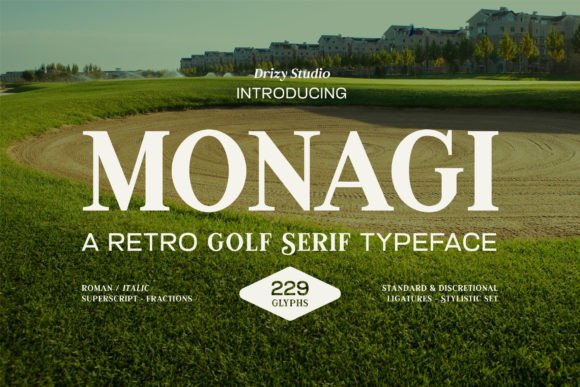
Monagi is not a general-purpose workhorse font. Its identity is deeply rooted in the visual language of classic golf, country clubs, and mid-20th-century sporting elegance. The typeface is defined by several key attributes:
- Serif Details: It features distinct, sharp serifs that provide structure and a traditional feel. These are not overly decorative but are crafted with a precision that suggests quality and care.
- Retro Appeal: The font carries a clear vintage flair, reminiscent of signage and branding from a bygone era of luxury sports and leisure. This isn't a distressed, grungy retro; it's a clean, sophisticated one.
- Stroke Contrast: There is a noticeable variation between thick and thin strokes within the letters, adding a dynamic, elegant rhythm that is common in high-contrast serif designs.
- Specific Context: Every letter is designed to "exude a sense of grace and precision," as its description states. This makes it inherently thematic, immediately evoking the finesse associated with golf.
This combination makes Monagi a highly specific stylistic choice. It's less about conveying information in a neutral way and more about instantly setting a mood and associating a project with a world of classic taste.
Practical Strengths and Ideal Use Cases
Where Monagi truly excels is in applications where the vibe is as important as the message. Its strengths lie in its ability to communicate a specific heritage without requiring additional explanation.
Best-Fit Situations:
- Branding for Niche Sports & Leisure: For logos, apparel, and signage for golf courses, tennis clubs, sailing events, or luxury resorts, Monagi provides an instant shorthand for tradition and exclusivity.
- Event Design: A prestigious golf tournament, a vintage car rally, or an elegant charity gala can use Monagi in invitations, programs, and banners to establish a cohesive and upscale atmosphere.
- Editorial & Packaging: The font works well for magazine headlines, book titles, or packaging for products like premium cigars, craft spirits, or heritage-brand goods that wish to emphasize timelessness.
- Digital Projects with a Classic Theme: Websites or apps focused on golf history, vintage sports, or luxury lifestyle can use Monagi for headlines and key display text to anchor their design language.
In these scenarios, Monagi acts as a powerful design element. A logo set in Monagi doesn't just name a club; it suggests its history and values. A tournament poster using this font feels immediately more prestigious and rooted in tradition.
Comparing Monagi to Broader Font Categories
When evaluating Monagi, it's helpful to see how it stacks up against other categories of typefaces that might be considered for similar projects.
Monagi vs. Traditional Old-Style Serifs:
Classic Old-Style serifs (like those inspired by Garamond or Caslon) are workhorses of elegance and readability. They are designed for long-form text and offer a timeless, scholarly feel. Monagi, in contrast, is more stylized and display-oriented. Its retro sporting vibe is more specific than the general elegance of a traditional serif. You might choose a traditional serif for body copy in a golf club brochure, but Monagi for the club's main logo or event headline.
Monagi vs. Modern Serifs & Didones:
Modern serifs (like Bodoni or Didot) feature extreme contrast between thick and thin strokes and flat, unbracketed serifs. They convey luxury, high fashion, and sharp sophistication. While Monagi shares the high contrast, its serifs are more bracketed and its overall feel is warmer, more organic, and more "vintage" than the sleek, sometimes cold precision of a Modern serif. If your project leans more toward haute couture than country club, a Modern serif might be more appropriate.
Monagi vs. Generic Retro Fonts:
The market is filled with retro-inspired fonts, from Art Deco to psychedelic 1970s styles. Monagi's distinction is its specific association with elegant sport. Many retro fonts evoke a sense of fun, nostalgia, or novelty. Monagi maintains a consistent tone of seriousness, precision, and understated class. It avoids the kitsch that can sometimes accompany retro designs.
Tradeoffs and Limitations to Consider
No typeface is perfect for every situation. Acknowledging Monagi's limitations is key to making an informed decision.
- Thematic Limitation: Its greatest strength is also its main constraint. Using Monagi for a tech startup, a children's brand, or a casual modern blog would feel incongruent and potentially confusing. It is not a neutral tool.
- Readability at Small Sizes: Like many high-contrast display serifs, the fine details of Monagi can become lost or cause visual noise when used at very small sizes or for long blocks of text. It is best reserved for headlines, logos, and short, impactful text elements.
- Overuse Risk: Because it is so distinctive, overusing Monagi throughout a single design can make the project feel one-note or overly themed. It often works best as a headline font paired with a cleaner, more neutral sans-serif or serif for body copy.
- Audience Perception: The "retro golf" aesthetic carries specific cultural connotations. It's essential to consider whether your target audience will interpret these connotations as intended—as markers of quality and tradition—or if they might perceive them as stuffy or outdated.
Making the Decision: When to Choose Monagi
Use this checklist to see if Monagi is the right fit for your project:
- Does your project need to evoke a sense of classic, sporting elegance? If the answer is a clear yes, Monagi is a strong candidate.
- Is the primary use for display text (logos, headlines, titles)? Monagi is designed for this. If you need a font for body text, look elsewhere.
- Does the overall brand or project have a timeless, heritage, or vintage angle? Monagi supports this narrative directly.
- Can you pair it effectively with a more neutral font for supporting text? This is often key to a balanced design.
- Have you considered the audience's potential associations? Ensure the "country club" vibe aligns with your brand's intended message.
If you answered yes to most of these questions, Monagi could be the ace in your creative toolkit. It offers a ready-made aesthetic that is difficult to replicate by combining more generic fonts.
However, if your project requires more versatility, a broader range of weights and styles, or needs to fit into a more contemporary or neutral design system, exploring high-quality traditional serif families or even some geometric sans-serifs with a classic feel might yield a more flexible solution. The goal is to match the tool to the task, and Monagi is a specialized tool that, when used correctly, delivers unparalleled results in its niche.