Understanding Almost: The Anatomy of a Modern Sans-Serif Typeface
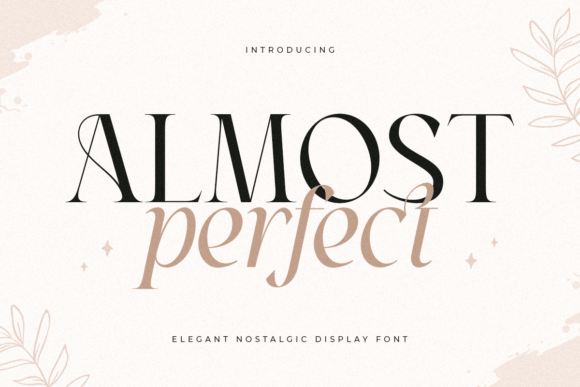
In the vast landscape of digital design and typography, the choice of typeface is rarely merely cosmetic; it is a foundational decision that dictates the voice, tone, and functionality of a project. Among the myriad options available to designers today, Almost has emerged as a distinct contender. It is a modern and stylish sans-serif font that marries clean lines with subtle curves, creating a contemporary aesthetic that balances neutrality with character. To truly understand the value of a typeface like Almost, one must look beyond its visual appeal and examine its technical construction, its psychological impact on readers, and its practical application across various media.
The Geometry of Modernity
At its core, the design philosophy behind Almost revolves around the tension between strict geometry and organic form. Traditional sans-serif fonts often fall into two categories: grotesque, which retains some irregularities of early printing, and geometric, which relies heavily on perfect circles and squares. Almost positions itself in a unique middle ground. While its structure is built upon clean, rational lines, it introduces subtle curves that soften the overall appearance. This architectural approach prevents the font from feeling sterile or cold, a common critique of ultra-modern typefaces.
The letterforms of Almost are designed with a focus on legibility. The x-height—the height of lowercase letters like 'x' or 'a'—is typically generous in this style of typography. This design choice ensures that the text remains readable even at smaller sizes, making it an excellent candidate for body text in web environments where screen resolution and reading distance vary. The terminals, or the ends of strokes, are often cut cleanly or finished with a slight curve, contributing to a rhythm that guides the eye naturally from one word to the next.
The Role of White Space
A critical, yet often overlooked, aspect of a font like Almost is its management of negative space. The counter—the enclosed or partially enclosed area within letters such as 'o', 'e', or 'c'—is carefully balanced. If these counters are too tight, the text becomes difficult to read when printed small or viewed on low-resolution screens. If they are too open, the letters lose their cohesion. Almost achieves a sophisticated presence by optimizing these internal spaces, ensuring that the text breathes. This attention to detail enhances every composition, allowing the typography to sit comfortably within a layout without demanding excessive attention while still maintaining a strong visual presence.
Practical Applications in the Digital Age
The versatility of a typeface determines its longevity. Almost demonstrates significant flexibility, making it suitable for a wide range of professional contexts. Its utility is not limited to a single niche; rather, it adapts to the content it conveys.
Editorial Design and Publishing
In the realm of editorial design, clarity is paramount. Whether designing a digital magazine, a corporate annual report, or a long-form blog, the text must be legible across thousands of words. Almost excels here because of its "clean lines." It does not distract the reader with excessive ornamentation. Instead, it serves as a transparent vessel for the content. For instance, in a high-fashion magazine, the headings might use a bold weight of Almost to command attention, while the body text uses a regular weight to ensure comfortable reading. The font’s ability to handle complex layouts—such as multi-column grids—without looking cluttered is a significant advantage for publishers.
Branding and Identity
For luxury branding, the typography must evoke a sense of quality and exclusivity without appearing dated. Almost provides a contemporary look that aligns well with modern luxury. It suggests a brand that is forward-thinking, confident, and sophisticated. Consider a high-end skincare line or a minimalist furniture brand; the subtle curves of Almost can convey softness and approachability, while the clean lines communicate precision and engineering. It avoids the "techy" feel of some geometric sans-serifs, making it more emotionally resonant for consumer goods.
Web Typography and User Interfaces
On the web, performance and readability are inextricably linked. Fonts that are too complex can slow down page load times or render poorly on different browsers. Almost is optimized for web typography, maintaining its structural integrity across various devices, from large desktop monitors to mobile phones. Its sophisticated presence enhances the user interface (UI) by providing a consistent visual language. Whether used for navigation menus, button labels, or paragraph text, it ensures that the digital experience feels polished and professional.
Comparative Analysis: Why Choose Almost?
When selecting a font, designers often compare candidates against the specific requirements of their project. To understand where Almost fits, it is helpful to consider what it offers that other sans-serifs might not.
- Distinction in Uniformity: Many popular sans-serifs are designed to be "invisible"—to do their job without any personality. Almost, however, possesses a subtle character. It is distinct enough to be recognizable but neutral enough to be versatile. This makes it ideal for brands that want to stand out without resorting to novelty fonts.
- Modern Elegance: The term "elegant" is often reserved for serif fonts with high contrast. Almost redefines elegance for the sans-serif category. By using refined proportions and thoughtful spacing, it achieves a level of sophistication that suits formal applications like wedding invitations or high-end event programs.
- Scalability: From a massive billboard to a tiny footnote on a mobile screen, the font scales effectively. The "clean lines" ensure that the vector paths remain crisp when scaled up, while the "subtle curves" prevent pixelation artifacts at smaller sizes.
Design Considerations and Pairing
Using Almost effectively requires an understanding of typographic hierarchy and pairing. Because Almost is a modern sans-serif, it pairs exceptionally well with traditional serif fonts. This contrast creates a visual hierarchy that helps organize information. For example, using a classic serif for pull quotes or subheadings can provide a counterpoint to the sleekness of Almost, creating a dynamic and engaging layout.
However, designers must also consider the specific "mood" they wish to create. If the goal is a strictly minimalist, futuristic aesthetic, pairing Almost with another sans-serif of a different weight or width can work, provided there is enough contrast to distinguish between different levels of information. The key is to avoid monotony. Since Almost is described as having a "stylish" quality, it is important not to overuse decorative elements around it; the typography should be allowed to stand on its own merits.
Color and Contrast
The visual weight of Almost allows it to function well in various color scenarios. It stands up to bold, dark backgrounds, making it a strong choice for "dark mode" interfaces where white text is set against black or dark grey. Conversely, its clean construction ensures that it remains legible when printed in light grey on white paper—a notoriously difficult test for many fonts. This adaptability in color application further cements its status as a reliable tool for creatives.
The Psychology of Typography
Typography influences how a message is received before the words are even read. The "contemporary look" of Almost signals to the viewer that the content is current and relevant. In an era where trends shift rapidly, using a font that feels dated can make a brand or publication seem out of touch. Almost offers a timeless modernity. It suggests that the creator cares about quality and aesthetics, which can build trust with the audience.
Furthermore, the readability of a font impacts user retention. If a website uses a font that causes eye strain, users will leave. The comfortable rhythm of Almost, driven by its optimized spacing and clear letterforms, encourages longer reading sessions. This is particularly crucial for educators and researchers who disseminate complex information; a clear typeface reduces cognitive load, allowing the reader to focus on the content rather than deciphering the text.
Conclusion: A Tool for the Modern Creator
In the toolkit of a modern designer, versatility is the most prized attribute. Almost represents a synthesis of form and function. It is a typeface that respects the rules of typography—legibility, hierarchy, and structure—while bending them just enough to introduce personality. For business owners, it offers a reliable way to communicate professionalism. For hobbyists and creators, it provides a canvas that elevates their work.
Choosing a font is an act of curation. By selecting Almost, one chooses a typeface that is equipped for the complexities of modern communication. It bridges the gap between the cold precision of early digital fonts and the warmth of humanist design. Whether applied to a luxury brand, a scientific journal, or a personal portfolio, it adapts to the context, proving that sometimes, the best design is almost perfect.