Strawberry Lemonade: A Fresh Take on Colorful Typography
Understanding the Design Asset
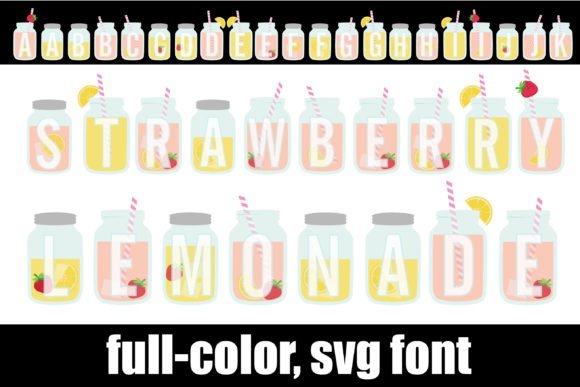
In the landscape of digital design, typography often serves as the silent workhorse, conveying information without drawing undue attention to itself. However, when a project demands a specific thematic atmosphere—such as summery, fresh, or artisanal vibes—standard black-and-white typefaces often fall short. This is where Strawberry Lemonade enters the conversation. It is not merely a typeface in the traditional sense; it is a specialized OpenType full-color SVG font. The design features sans serif lettering rendered to look like text placed on glass jars of strawberry lemonade. This visual metaphor offers an immediate context for branding and packaging design, allowing creators to inject personality into their work without complex layering or vector manipulation.
The Technical Reality of SVG Fonts
For professionals accustomed to standard TTF or OTF files, the workflow for Strawberry Lemonade requires a brief adjustment period. The installation process is identical to any other font file—you can use FontBook on macOS or the Control Panel/Settings on Windows. However, the rendering behavior differs significantly based on the software environment.
It is crucial to understand the limitations of color fonts. While Strawberry Lemonade contains full-color data, this information is only visible in compatible programs. In non-compatible environments, such as older word processors or legacy design software, the font will render as a solid black silhouette. Even in compatible programs, the font preview window or dropdown menu often displays the black version. You will only see the intended "jar" aesthetic once you begin typing on the canvas.
Currently, full-color SVG support is robust in major creative suites. Programs that effectively support Strawberry Lemonade include:
- Adobe Photoshop and Illustrator
- Silhouette Studio
- QuarkXPress
- Inkscape
If your workflow relies on these tools, you can utilize the font with full fidelity. If you are working in environments like Microsoft Word or standard web CMS text editors, the visual impact will be lost, rendering it as a generic black sans serif.
Practical Application and Scalability
One of the primary strengths of Strawberry Lemonade lies in its underlying technology. As an SVG (Scalable Vector Graphics) font, the design is vector-based. This ensures that whether you are creating a small label for a jam jar or a large banner for a farmers' market stall, the resolution remains crisp. There is no pixelation or degradation of quality when scaling up, which is a significant advantage over raster-based textures that might otherwise be used to achieve a similar look.
For graphic designers, this asset solves a specific problem: how to add texture and depth to typography quickly. Instead of creating a text layer, applying a clipping mask, and pasting a texture image of a jar or fruit, Strawberry Lemonade encapsulates that aesthetic in a single keystroke. This streamlines the design process, particularly for projects with tight turnarounds.
Ideal User Scenarios
While versatile, Strawberry Lemonade is not a universal solution for corporate communications. Its value is highest in specific contexts where thematic resonance is key. The following groups are likely to find the most practical utility in this font:
- Small Business Owners: Particularly those in the food and beverage industry. If you sell homemade preserves, beverages, or bakery items, this font provides an immediate "homemade" or "artisanal" signal to the customer.
- Event Planners and Invitations: For summer parties, bridal showers, or picnics, the font sets a relaxed, festive mood without requiring additional graphic elements.
- Content Creators and Bloggers: Food bloggers can use Strawberry Lemonade for section headers or featured image text to maintain a cohesive visual brand identity related to recipes and fresh ingredients.
- Marketers: When designing seasonal social media graphics or flyers for a promotion, this font can draw the eye effectively due to its color and novelty.
Evaluating Usability and Limitations
From a usability standpoint, Strawberry Lemonade performs best when used as a display or headline font. Because of the intricate detail involved in simulating the glass jar texture, legibility can decrease at very small point sizes. It is not recommended for body text or long paragraphs; rather, it should be reserved for short bursts of text where the visual style is the primary focus.
Furthermore, users should be aware of the color limitations. While the font is "full color," you cannot easily change the hue of the text via standard font color pickers in the way you would with a monochrome font. The colors are baked into the SVG data. If your design requires a blue lemonade jar rather than a pink one, you would need to convert the text to outlines or shapes and manually adjust the colors, which negates some of the efficiency benefits of using the font.
Conclusion
Strawberry Lemonade