Future Career Font: A Modern Typeface for Professional Design
Understanding the Essence of Future Career
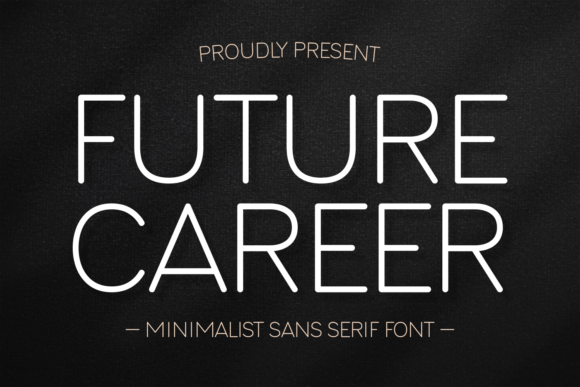
In the current design landscape, typography is no longer just about legibility; it is about voice and context. When evaluating new typefaces, I look for a balance between aesthetic appeal and functional versatility. Future Career is a sans serif font that positions itself firmly in the "elegant and modern" category. It distinguishes itself through a minimalist approach, avoiding the geometric rigidity of older sans serifs while steering clear of the overly friendly, rounded edges found in many contemporary "tech" fonts.
The core value proposition of Future Career lies in its neutrality paired with sophistication. It does not scream for attention, which makes it an asset for designers who need a typeface that supports content rather than overwhelming it. For professionals ranging from entrepreneurs to educators, the choice of font can subconsciously signal the quality of the brand. Future Career attempts to bridge the gap between high-end editorial design and accessible digital content.
The Anatomy of a Modern Sans Serif
What makes a font feel "modern"? Usually, it comes down to proportions and spacing. Future Career features clean lines and a generous x-height, which contributes to its readability on both small mobile screens and large desktop monitors. The letterforms are unadorned, relying on subtle curves and precise kerning to create rhythm.
Unlike decorative fonts that have a short shelf-life, a minimalist typeface like Future Career is built for longevity. It avoids trendy ligatures or excessive stylistic alternates that might date a design within a year. Instead, it offers a timeless structure. For a small business owner creating a brand identity, this is a critical factor. You want a logo and website typography that will still look relevant in five to ten years. Future Career’s design suggests it has that staying power.
Practical Application and Versatility
The true test of a font is how it performs in the wild. Future Career is marketed for applications ranging from book covers to social media posts. In practice, this versatility stems from its balanced weight distribution. It is light enough to feel airy in a magazine layout but sturdy enough to hold up as a headline on a poster.
Print vs. Digital Performance
When used in print—specifically for invitations or book covers—Future Career excels at creating a sense of luxury without pretension. The spacing allows the ink to breathe on the paper, preventing the text from looking cramped. For publishers, this makes it a strong candidate for title pages or chapter headings where you want to establish a sophisticated tone.
In the digital realm, specifically on social media, clarity is king. Users scroll quickly, and text must be legible in a fraction of a second. Future Career’s clean structure ensures that calls to action, quotes, or informational graphics are immediately digestible. It pairs well with photography, sitting comfortably over complex backgrounds without creating visual noise.
Who Benefits Most from Future Career?
While any designer can utilize this asset, certain professionals will find it particularly useful. It is an excellent tool for those who need to communicate professionalism and cleanliness.
- Freelancers and Agencies: When pitching to clients, presentation matters. Using a font like Future Career in pitch decks or mockups signals a modern, forward-thinking approach.
- Content Creators and Bloggers: For those building a personal brand, consistency is key. Future Career can serve as a primary header font across a blog, Instagram, and YouTube thumbnails to create a cohesive visual identity.
- Corporate Communications: Internal documents, newsletters, and reports often suffer from stale typography. Introducing Future Career can modernize a company’s internal and external communications without requiring a complete rebrand.
Integration into Workflow
From a technical standpoint, Future Career is designed to be user-friendly. It integrates seamlessly into standard design software like Adobe Creative Suite, Canva, and Figma. The file organization is typically clean, allowing for quick installation.
However, it is important to consider the learning curve associated with minimalist fonts. Because they lack decorative elements, the designer bears more responsibility for layout and hierarchy. You cannot rely on the font’s "personality" to do all the heavy lifting. You must use size, weight, and whitespace effectively. Future Career supports this by usually offering a range of weights (from Light to Bold), giving you the necessary tools to create contrast and emphasis within your hierarchy.
Pairing Strategies
A sans serif like Future Career rarely stands alone in a large body of text; it needs a partner. It pairs exceptionally well with classic serifs like Garamond or Times New Roman for body copy, creating a contrast between modern headings and traditional reading text. Alternatively, pairing it with a monospaced font can create a trendy, editorial look suitable for tech-focused publications. The key is to let Future Career handle the structural elements while the secondary font handles the narrative flow.
Evaluating the Limitations
No asset is perfect for every scenario. While Future Career is highly versatile, it may not be the best choice for projects requiring a "warm" or "handmade" feel. Its precision and cleanliness can sometimes come across as sterile if not paired with the right imagery or color palette.
Furthermore, because minimalist sans serifs are currently trending in UI/UX design, there is a risk of designs looking generic if not customized. To get the most out of Future Career, designers should focus on unique layouts, color schemes, and supporting graphics. Relying on the font alone to make a design "pop" may result in a project that feels safe but uninspired.
Conclusion: Is Future Career Worth the Investment?
For professionals seeking a reliable, elegant, and modern typeface, Future Career presents a strong case. It is not merely a decorative element but a functional tool that enhances communication. Its strength lies in its ability to adapt to various contexts—from the seriousness of a business proposal to the visual punch of an Instagram story.
If your goal is to elevate your visual communication with a typeface that balances modern aesthetics with professional reliability, Future Career is a worthy addition to your toolkit. It requires thoughtful implementation to avoid blandness, but when used correctly, it provides the polished, clean foundation that most contemporary designs require.