Fighter Attack: Evaluating a High-Energy Handwritten Font for Maximum Impact
In the landscape of graphic design, typography is rarely just about legibility; it is about voice. When a project demands a visceral, aggressive, or rebellious tone, standard sans-serifs often fall short. This is where display typefaces like Fighter Attack enter the conversation. As a raw and fearless handwritten brush font, it aims to deliver a specific aesthetic: motion, grit, and untamed energy. For designers weighing their options in the crowded market of grunge and brush fonts, understanding the specific utility and tradeoffs of Fighter Attack is essential before committing it to a layout.
Anatomy of a Scratched Typeface
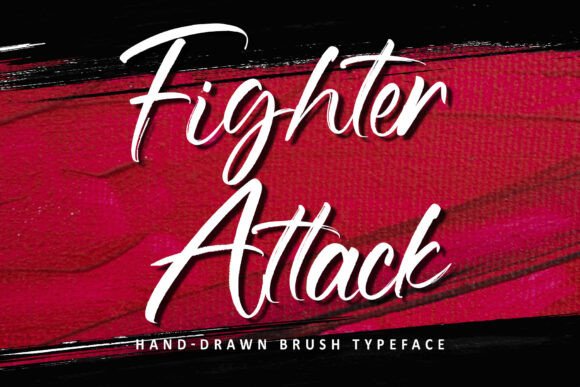
At its core, Fighter Attack is designed to simulate the erratic, high-velocity strokes of a heavy brush or marker. Unlike traditional calligraphy fonts that prioritize flow and elegance, this typeface prioritizes texture and jagged edges. The construction of each glyph is intentionally imperfect, featuring rugged textures that mimic ink splatter or paint strokes on rough surfaces. This "untamed spirit" is achieved through high-contrast thick and thin lines that vary unpredictably, creating a sense of movement even in static text.
A key technical feature of Fighter Attack is its inclusion of dynamic alternates and full PUA (Private Use Areas) encoding. For the average user, this means the font is not limited to a single static set of characters. By utilizing OpenType features or character maps, designers can swap out specific letters to avoid repetitive loops or strokes. This is a critical distinction when comparing it to lower-quality brush fonts, which often suffer from visible repetition when a word contains duplicate letters. The encoding ensures that the font remains versatile across different operating systems and design software, a practical necessity for professional workflow.
Contextual Fit: Where Does Fighter Attack Belong?
Evaluating a font requires looking at its "best-fit" scenarios. Fighter Attack thrives in environments where the message needs to be felt immediately, often before it is even read. Its aesthetic is inherently loud, making it a strong candidate for specific applications.
- Streetwear and Apparel: The rugged texture aligns well with the fashion industry’s edgier subcultures. It pairs naturally with distressed denim, leather, and urban photography.
- Event Branding: For music festivals, extreme sports events, or underground club nights, the font provides the necessary adrenaline.
- Poster Design: In compositions requiring a dominant headline that anchors the visual hierarchy, Fighter Attack serves as a focal point that demands attention.
However, the very qualities that make it strong in these areas serve as limitations in others. The "wild strokes" and "rugged texture" that define Fighter Attack can become a liability in contexts requiring sustained reading. It is not designed for body copy, subtitles, or detailed instructions where clarity is paramount. If a project requires a tone of stability, trust, or quiet professionalism—such as corporate reports or medical brochures—this font would likely create cognitive dissonance for the reader.
Comparing Approaches: Brush Fonts vs. Clean Typography
When designers select Fighter Attack, they are making a deliberate stylistic choice that prioritizes emotion over neutrality. It is helpful to compare this approach against other common typographic strategies to understand the tradeoffs involved.
Texture vs. Scalability
One of the primary tradeoffs with high-texture fonts like Fighter Attack is scalability. While vector fonts are infinitely scalable, the intricate details of brush strokes can sometimes become muddy or illegible at very small sizes. In contrast, a geometric sans-serif retains its shape perfectly at 6pt or 600pt. Therefore, if the design must function across a wide range of sizes—such as a mobile app icon versus a billboard—a designer might find Fighter Attack challenging to manage without creating specific optical sizes for the typeface.
Character vs. Versatility
Neutral fonts act as a blank canvas, allowing the content and imagery to take center stage. Fighter Attack, conversely, imposes a strong personality on the design. This is ideal when the brand identity is built around rebellion or intensity. However, it limits the font's versatility. You cannot easily repurpose a header set in Fighter Attack for a luxury brand campaign or a minimalist tech startup without completely rebranding the visual tone. It is a specialized tool, whereas a font family like Helvetica or Inter is a generalist tool.
Evaluating the "Attitude" Factor
The marketing language surrounding fonts like Fighter Attack often emphasizes "strength" and "rebellion." From a practical design perspective, this translates to visual weight. Dark, heavy fonts anchor a layout. They draw the eye downward and create a sense of gravity. Fighter Attack leverages this by combining heavy weight with a rough finish.
When comparing this to other display options, such as distressed slab serifs or industrial sans-serifs, Fighter Attack offers a more organic feel. Industrial fonts suggest machinery and precision; Fighter Attack suggests human effort and raw power. This distinction is subtle but vital. If the brand narrative is about "handmade" quality or "fighting spirit," the organic brush strokes support that story better than a mechanical, grid-based typeface would.
Practical Decision Factors for Designers
Before integrating Fighter Attack into a project, a professional designer should weigh several practical factors to ensure it is the right resource for the job.
- Readability at a Glance: Can the audience read the headline in under two seconds? Because the strokes are wild and the texture is rugged, words with complex letter combinations might blur together. Testing the specific copy intended for the design is crucial.
- Color and Contrast: Fonts with high texture often require higher contrast backgrounds to remain legible. Placing Fighter Attack over a busy photograph without a backing overlay or drop shadow can result in a chaotic mess. It performs best on solid, contrasting backgrounds or simple textures.
- Pairing Strategy: A font this loud requires a quiet partner. Pairing Fighter Attack with another decorative font will likely result in visual noise. It is best paired with a clean, wide sans-serif for subheadings or a classic serif for body text to provide a "rest" for the eye.
When to Seek Alternatives
While Fighter Attack is a potent weapon in a designer's arsenal, it is not a universal solution. There are scenarios where exploring alternatives is the more prudent path.
If the project requires a vintage or retro aesthetic, specifically mimicking 1950s Americana or 1970s psychedelic styles, Fighter Attack may feel too modern or "skate-culture" adjacent. In those cases, a specialized retro-script or a distressed serif would be more historically accurate.
Furthermore, if the project involves extensive localization—translating content into languages with complex character sets like Cyrillic, Greek, or extended Latin—designers must verify the glyph support. While Fighter Attack includes PUA encoding for stylistic alternates, coverage of non-Latin characters in display fonts can be inconsistent. In such cases, a font family with broad linguistic support is necessary to maintain brand consistency globally.
Conclusion: Making an Informed Choice
Fighter Attack occupies a specific niche in the typographic ecosystem: it is a high-energy, texture-heavy brush font built for impact. Its strengths lie in its ability to convey motion, aggression, and raw attitude, making it an excellent choice for streetwear, posters, and bold logos.
However, like any specialized tool, it comes with tradeoffs regarding readability, scalability, and versatility. It is not a "set it and forget it" font; it requires thoughtful pairing, careful sizing, and a clear understanding of the brand's voice. By weighing these factors—comparing the organic grit of Fighter Attack against the needs of the specific project—designers can determine if this typeface is the right weapon to dominate the scene or if a more subdued option is required.